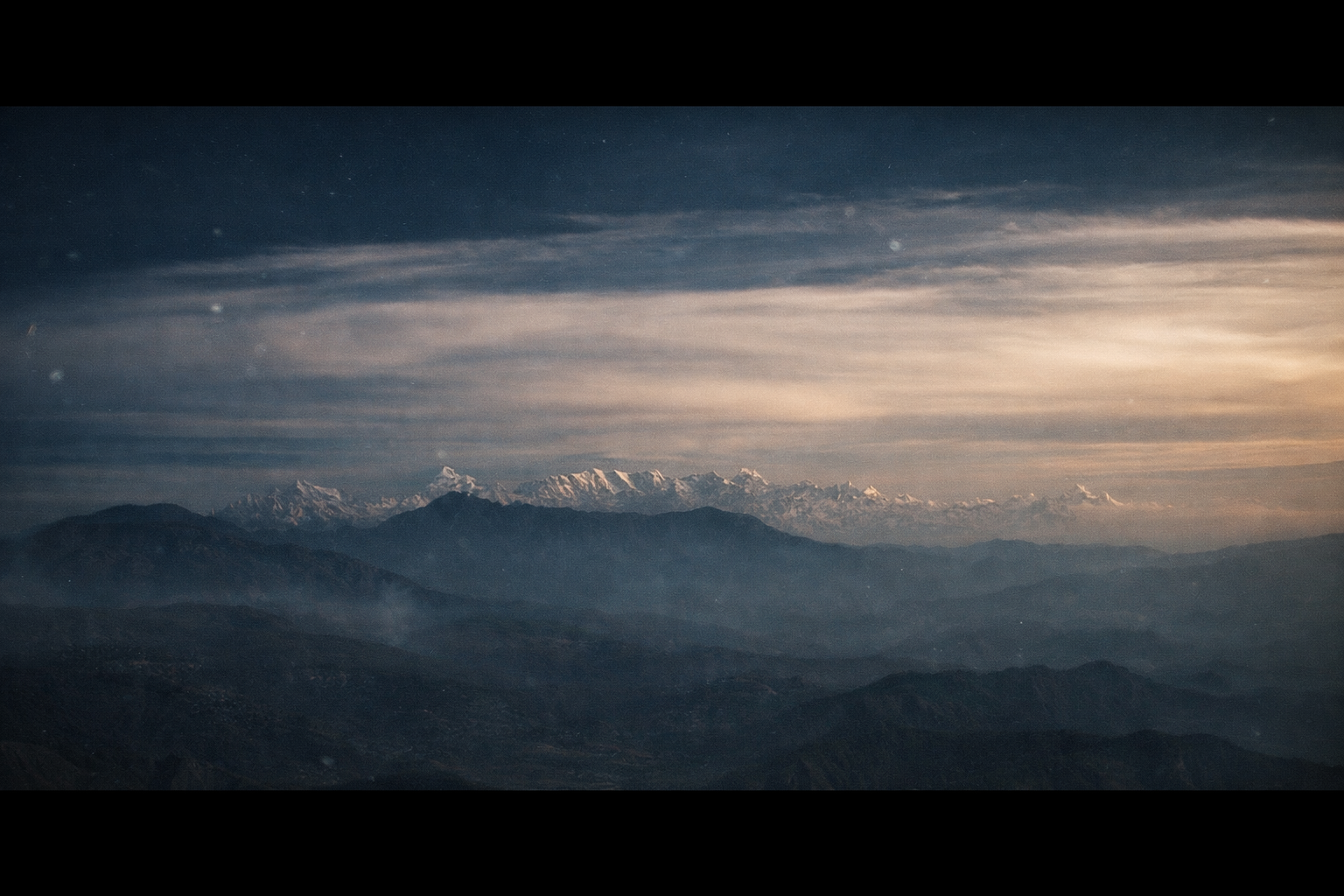
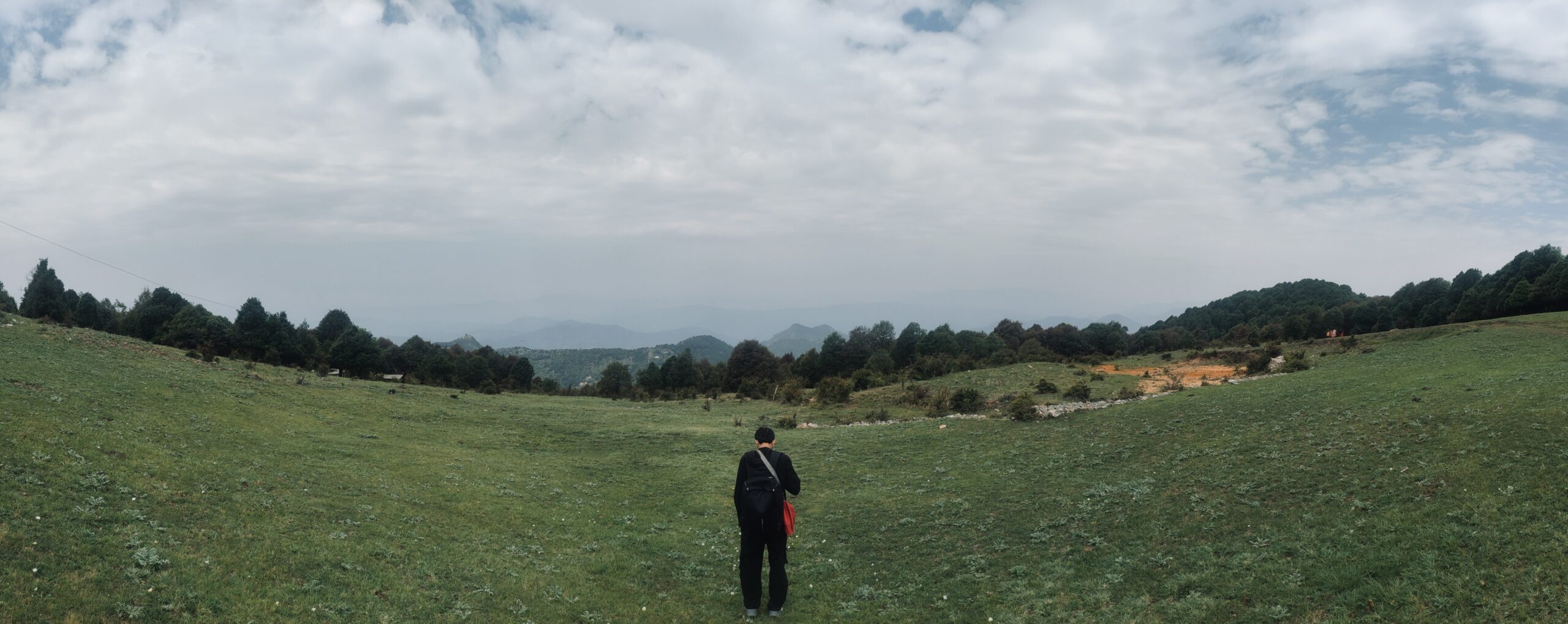
Beyond Dharchula, past the last ATM and the last reliable signal bar, the road narrows into something closer to a suggestion than a route. This is Darma Valley one of Kumaon's last genuinely untouched corners, and the doorway to five peaks that have carried the weight of legend for as long as anyone here can remember.
A valley shaped by its river and its border
The road in follows the **Kali River**, which for much of the journey marks the boundary between India and Nepal a quiet reminder that this landscape has always belonged as much to movement and trade as to any single side of a map. Villages like **Askot** and **Jauljibi**, where the Kali meets the Gori, grew up around exactly that kind of exchange, long before either country existed in its current form. By the time the road reaches **Dharchula**, the atmosphere has already shifted Nepali and Indian hill life sitting side by side in the same market stalls, the same evening streets.
Darma Valley itself opens up beyond Dharchula, home to the **Rung** community, whose villages here are lived in only through the summer months. Come winter, families move down to lower ground, leaving the valley to snow and silence until the cycle repeats the following year. It's a rhythm that has nothing to do with tourism and everything to do with survival at this altitude and it's still the pulse the whole valley moves to.
Five peaks and a story from the Mahabharata
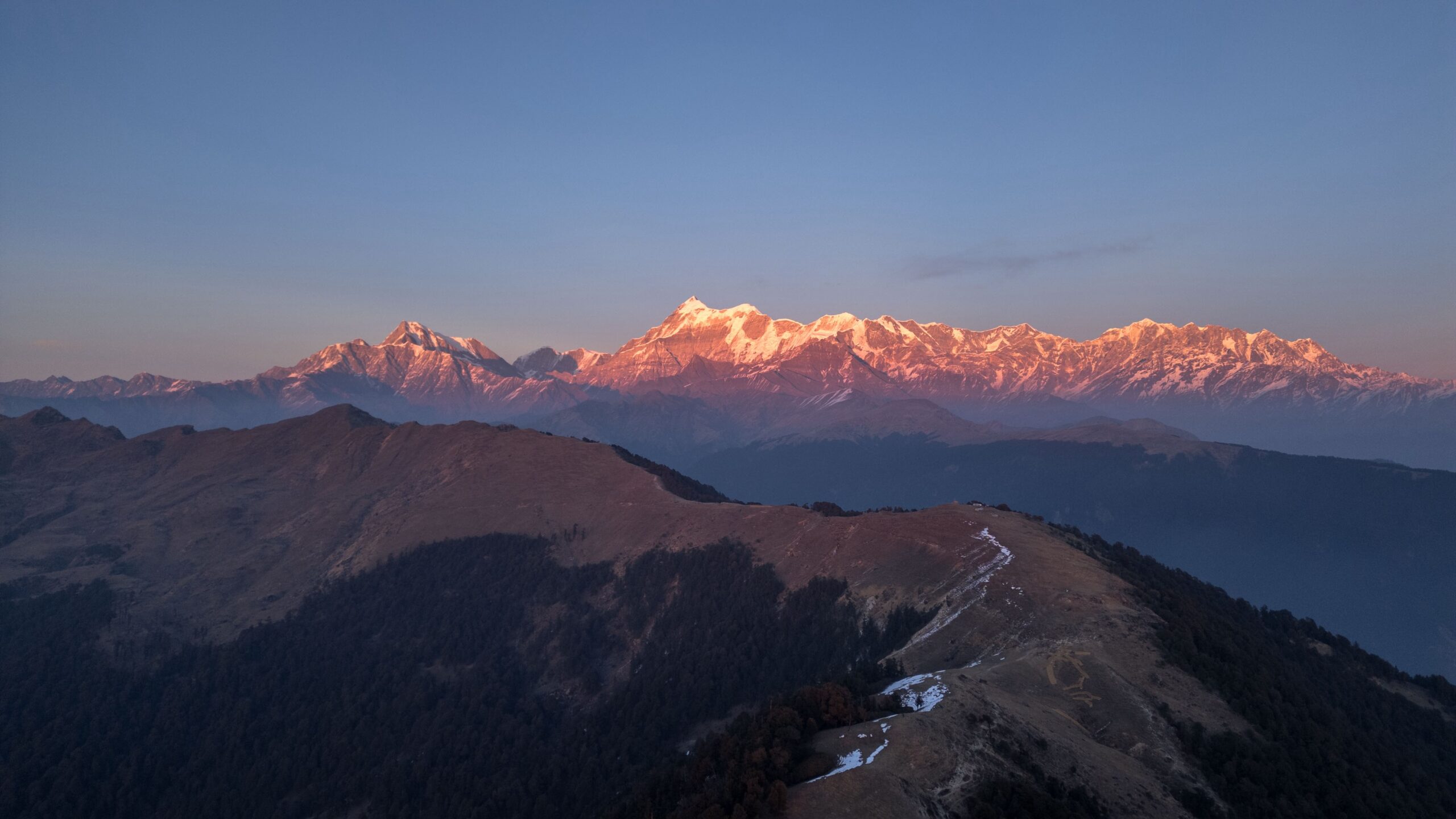
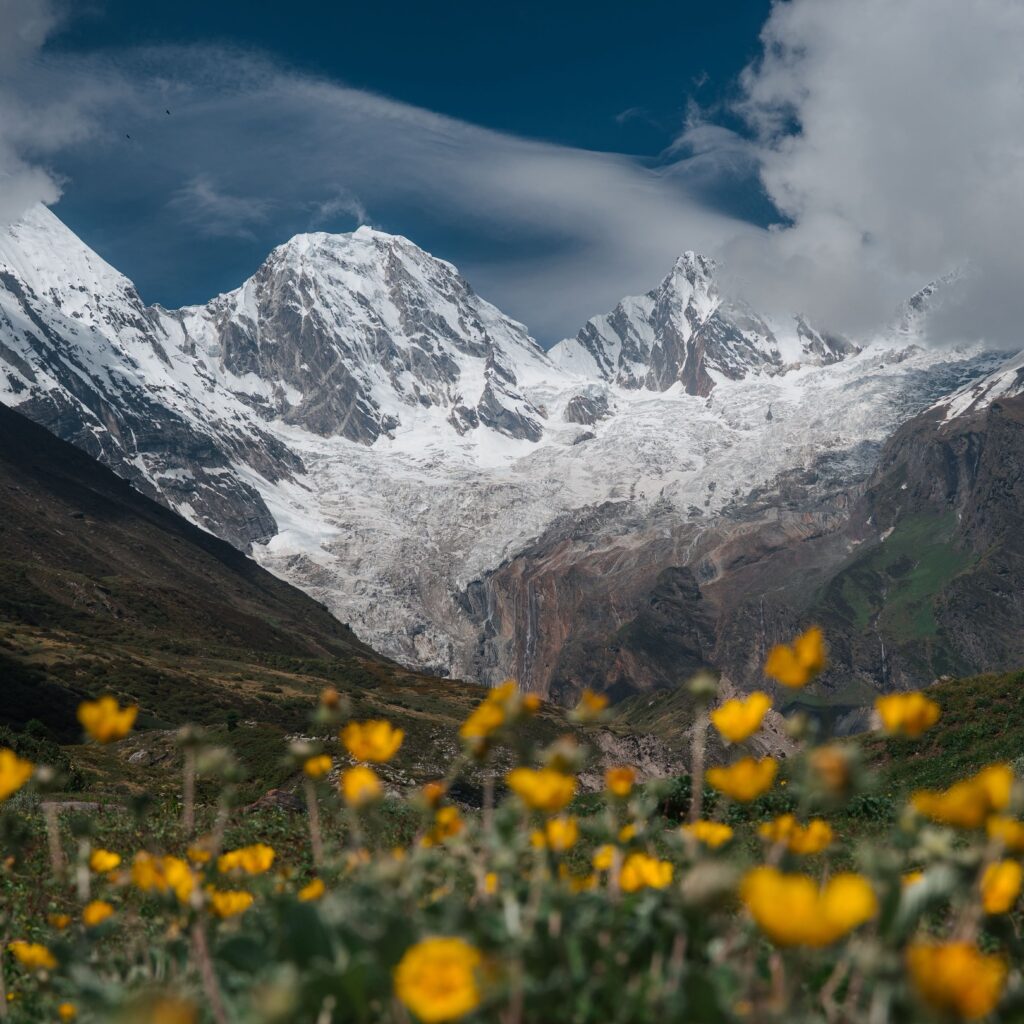
The **Panchachuli** literally "five hearths" dominate the valley's skyline, and the legend behind their name has outlived every other story told here. Local tradition holds that the Pandava brothers, on their final journey from the Mahabharata, cooked their last meal on these five summits before ascending to the heavens, each peak said to belong to one brother. Standing near Zero Point at the base camp, with the five summits catching the last light, it's easy to understand why the story has held on so long the scale and stillness of the place practically ask for one.
Temples along the way home
The return route out of the high valley doesn't simply retrace the road in it threads through some of Kumaon's oldest sacred sites. The **Patal Bhuvaneshwar Cave Temple**, an underground limestone cavern said to have been discovered by Pandu himself, sits beneath the hills near Gangolihat, its chambers named for different Hindu deities and lit by nothing but hand-carried lamps. Further along, the **Jageshwar Temples** more than a hundred stone shrines scattered through a cedar forest date back over a thousand years, their carvings worn soft by centuries of weather. And at **Chitai**, the **Golu Devta Temple** is wrapped in thousands of bells, each one left by a visitor who came seeking justice from a deity still known locally as an honest judge.
By the time the road reaches **Kasar Devi**, with its strange geomagnetic pull and some of the widest sunsets in Kumaon, the contrast between where the journey began and where it's ending feels enormous from temple towns and river valleys to a border wilderness and back again, in the space of a single loop.
What the valley leaves you with
Darma isn't a place that reveals itself quickly. The homestays are simple, the nights are cold, and the silence past Dharchula is the kind that takes a day or two to stop noticing. But it's also one of the few places left in Kumaon where the landscape hasn't been shaped around visitors at all where the villages, the rivers, and the mountains are still keeping to their own time.
Explore more: browse our itinerary for the Darma Valley Panchachuli Base Camp Expedition
Life at altitude, one season at a time
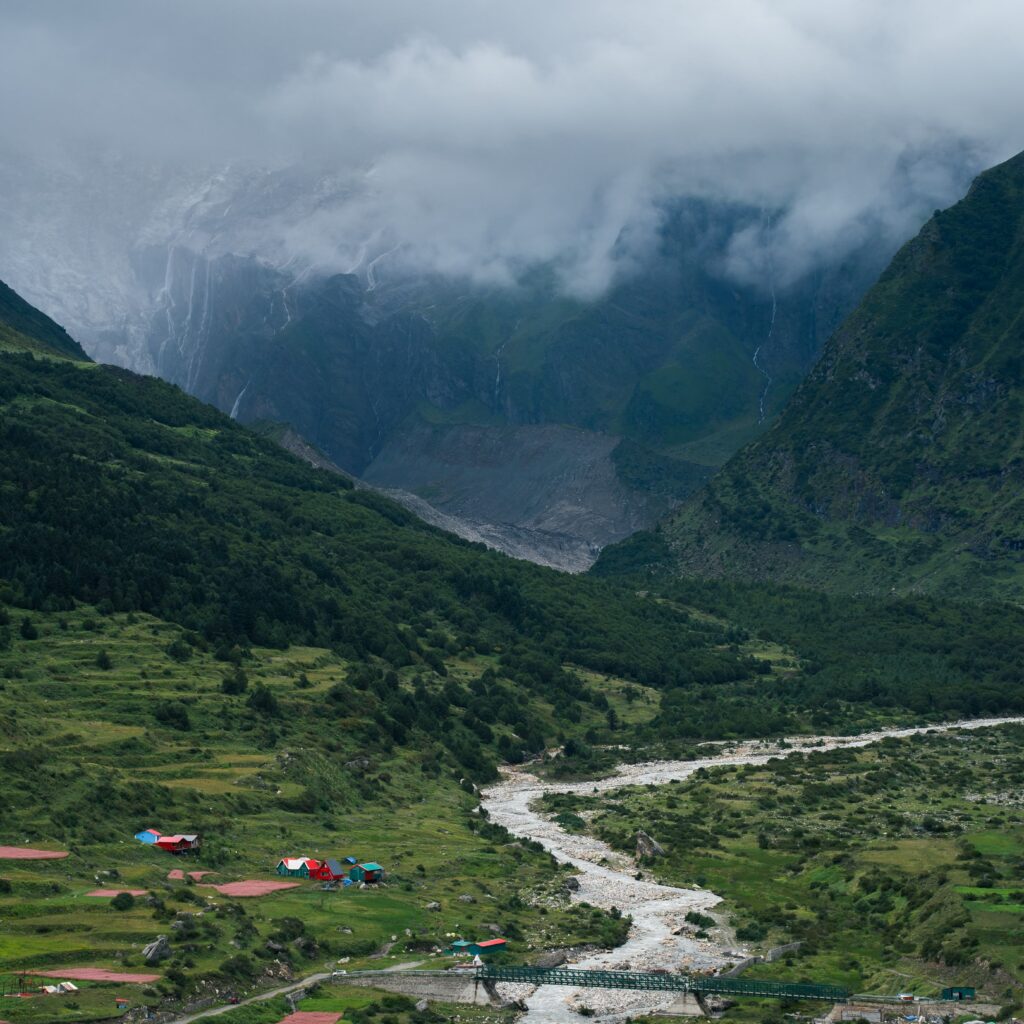
Darma's villages don't run on a single calendar the way lowland towns do. Fields are sown and harvested in a narrow window before the cold sets in, livestock are moved between pastures as the grass changes with elevation, and entire households relocate twice a year up to the valley in summer, back down toward Dharchula before winter closes the roads. Homes here are built thick-walled and low, designed for snow load rather than views, though the views come anyway, framed almost accidentally by small windows facing the peaks.
Bhotiya and Rung families in these villages still weave wool from their own sheep into blankets and shawls, a craft that once supplied traders heading toward Tibet and now mostly stays within the valley itself. It's not uncommon to see wool drying on a rooftop beside solar panels — two eras of the same practical mindset, sitting side by side without much fuss made of it.
The wildlife that shares the valley
Above the tree line, Darma's alpine meadows and rocky slopes are part of the range for **bharal**, the Himalayan blue sheep, and occasionally the animals that hunt them snow leopard sign, rarely the animal itself, turns up in the higher reaches most years. Lower down, the forest still holds Himalayan monal and koklass pheasant, their calls carrying further than you'd expect through the thin air. None of this is guaranteed viewing, but the valley's isolation is exactly what has kept these animals here at all, in numbers that have mostly disappeared from more heavily trekked parts of the Himalayas.
Why the isolation matters
It would be easy to read Darma's remoteness as simply an obstacle bad roads, poor signal, thin infrastructure. But that same isolation is the reason the valley still functions the way it does: villages that keep their own rhythms, temples that were never rebuilt for tour buses, and a stretch of the Kali River that hasn't been dammed or diverted the way lower stretches have. Getting there takes effort precisely because so little here has been smoothed over for the sake of getting there easily.